Review: Religious Cross Cup with Letter JHS Design
As an embroidery designer who has spent years digitizing and reviewing files for small business clients, I approach every new machine embroidery design with a critical eye. It is not just about whether the artwork looks pretty on a screen; it is about how that digital asset translates into a tangible, durable, and profitable finished product. Today, I am taking a close look at the Religious Cross Cup with Letter JHS. This piece falls squarely into the Religion category, offering a unique blend of sacred symbolism and modern branding potential for faith-based entrepreneurs.
The product description highlights that this is a wonderful design beautifully embroidered with any type of fabric you like to work with. For those of us running embroidery shops or handmade brands, versatility is key. However, "any type of fabric" is a bold claim that requires careful testing. In this review, I will evaluate how the Religious Cross Cup with Letter JHS performs in real-world commercial applications, from staff uniforms to boutique merchandise, and what you need to know before adding this digital embroidery file to your library.
First Impressions and Visual Personality
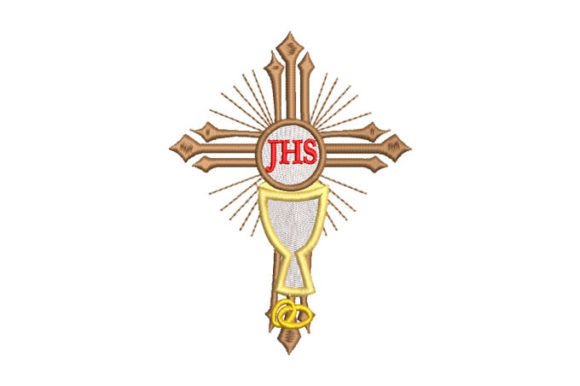
When I first loaded the preview of the Religious Cross Cup with Letter JHS, the immediate impression was one of classic elegance mixed with traditional reverence. The combination of the cross, the cup (often symbolizing communion or grace), and the Christogram "JHS" creates a cohesive religious icon. Visually, it feels premium and respectful rather than playful or rustic. This distinction is crucial for brand identity. If you are designing for a conservative church bookstore, a Catholic gift shop, or a faith-based nonprofit, this design projects professionalism and trust.
The design does not scream for attention with neon colors or chaotic lines. Instead, it relies on clear symbolism. For small business merch, this means the design can serve as a subtle yet powerful marker of values. It is decorative enough to stand alone on a tote bag but structured enough to work as a chest logo accent on a polo shirt. The aesthetic is timeless, which helps ensure that your inventory does not look dated within a season.
Real-World Business Applications
Let’s move beyond theory and discuss where this design actually makes money. For Etsy sellers and crafters, the Religious Cross Cup with Letter JHS is a strong candidate for several high-demand items.
- Embroidered Patches: This is perhaps the most versatile application. A well-digitized version of this design can be turned into iron-on or sew-on patches. These are excellent for customers who want to customize their own jackets, backpacks, or prayer journals without committing to full garment embroidery.
- Staff Uniforms and Aprons: Imagine a Christian café or a faith-based bakery. Embroidering this design on the corner of an apron embroidery setup adds a layer of authenticity to the brand. It signals to customers that the business operates with specific spiritual values.
- Tote Bag Design: Canvas totes are a staple for church events, retreats, and book clubs. The Religious Cross Cup with Letter JHS works well here because the symbols are recognizable even from a distance. It transforms a simple bag into a statement piece for custom apparel and accessory lines.
- Cap Embroidery: For headwear, placement is everything. This design could work on the side panel of a cap or as a smaller front-center element, provided the details are not too fine. It appeals to a demographic that wants to wear their faith subtly but proudly.
For product designers creating design assets for other businesses, this file can be part of a larger bundle for religious organizations. It adds value to printable mockup portfolios, allowing clients to visualize how the logo looks on different textures before production.
Technical Considerations for Production
While the concept is strong, the execution depends entirely on the technical quality of the embroidery file. The description states that the design comes with multiple formats, which is standard, but it does not specify stitch count or density. As a professional, I must advise caution here. High stitch density can cause puckering, especially on lighter fabrics like cotton t-shirts or linen tote bags. Conversely, low density might leave gaps in the lettering of "JHS," making it hard to read.
Here are my practical notes for testing this design:
- Test in Black and White First: Before committing to expensive thread colors, stitch out the design in black thread on white fabric. This reveals any issues with spacing, jump stitches, or unclear outlines without the distraction of color.
- Check Small Patch Sizes: If you plan to use this for tiny labels or small patches, zoom in on the "JHS" lettering. Fine details often merge together when scaled down. You may need to simplify the design or increase the size for legibility.
- Fabric Texture and Stabilizer: The claim that it works on "any type of fabric" is optimistic. On textured fabrics like fleece or terry cloth, small details can get lost. Always use the appropriate stabilizer—cut-away for stretchy knits and tear-away for stable wovens—to ensure the design remains crisp after washing.
- Hoop Size Constraints: Confirm the hoop size requirements. If the design is large, it may not fit on standard cap frames or small hoop attachments. Check the dimensions against your machine’s capabilities before promising it to a client.
Additionally, consider the thread colors. Religious symbols often look best in gold, silver, deep red, or navy blue. Ensure your digitizing software allows for easy color changes so you can offer variations to your customers. Contrast is vital; a light thread on a dark uniform needs sufficient underlay stitching to pop.
Impact on Brand Identity and Customer Trust
In the world of commercial embroidery, consistency builds trust. Using a cohesive design like the Religious Cross Cup with Letter JHS across various touchpoints—from employee badges to customer gifts—reinforces brand recognition. It tells a story of heritage and faith. For handmade brands, this emotional connection can justify a higher price point. Customers are not just buying a mug or a shirt; they are buying into a value system represented by the embroidery.
However, be mindful of where you place it. On curved surfaces like mugs (if using sublimation transfers of the embroidery look) or rounded caps, distortion can occur. Always create a printable mockup or a physical sample to show clients. This step prevents dissatisfaction and returns, protecting your reputation as a reliable provider of small business merch.
Final Verdict for Designers and Sellers
The Religious Cross Cup with Letter JHS is a solid addition to a niche-focused embroidery library. It serves a specific market with dignity and style. For Etsy sellers, church supply stores, and faith-based boutiques, it offers a ready-made solution for branding. However, success lies in the preparation. Do not assume the file is perfect out of the box. Test it on your specific machines, adjust tension if necessary, and verify the licensing terms for commercial embroidery use.
Remember, the goal is to create a handmade product that feels premium and intentional. By paying attention to fabric texture, stabilizer choice, and placement, you can turn this digital asset into a best-selling item. Whether it ends up on a tote bag design for a retreat or a patch for a ministry jacket, this design has the potential to resonate deeply with its audience. Just ensure you do the groundwork to make sure the final stitch matches the initial vision.